That’s a question we’re frequently asked by our patients before their consultation: Does a laser facelift work?
The short answer is yes. Results depend on the condition of the skin, treatment depth, and realistic expectations, though.
How the Laser Face Lift Works: The laser stimulates collagen under your outer skin layer. It does not literally pull up tissue, as in surgery. Instead, it gently reshapes the skin through biological processes.
When applied correctly to suitable individuals, laser facelift therapy can yield more apparent skin tightening and better-defined contours.
How Laser Face Lift Treatment Works
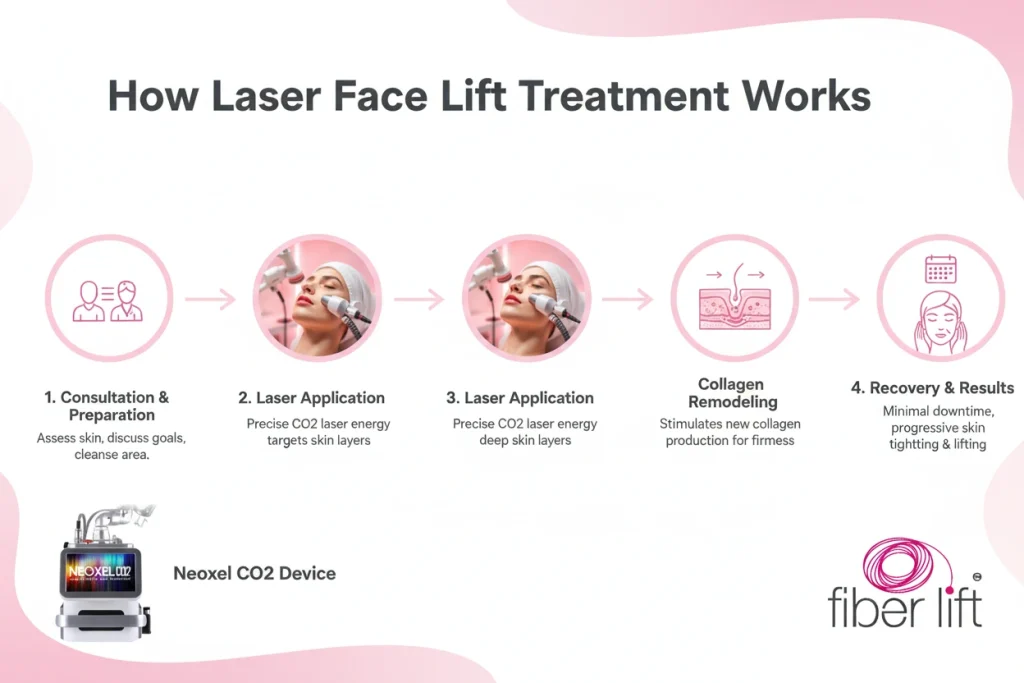
To understand if a laser facelift works, you need to know about collagen.
Collagen is the structural protein that keeps skin taut and elastic. As we age, collagen production slows down. This gives rise to laxity, fine lines, and a loss of definition along the jawline and neck.
The laser facelift treatment produces controlled heat energy to the dermis. This heat triggers a thermal response that is directed in. This, in turn, triggers the body to produce fibroblasts, which help synthesize new collagen.
Over several weeks, collagen rebuilds. As a result, the skin becomes firmer and smoother.
This is why laser skin tightening results appear gradually rather than instantly.
Is Laser Facelift Effective for Everyone?
Laser facelift treatment is most effective for mild to moderate skin laxity.
Patients who typically see strong results include those who:
- Notice early jowling
- Experience reduced skin firmness.
- Have mild neck laxity
- Prefer non-surgical rejuvenation
Younger patients with early signs of ageing often respond well because their collagen production remains relatively active.
However, individuals with severe sagging or significant tissue descent may not achieve surgical-level lifting with laser treatment alone.
Effectiveness depends on proper candidate selection. That is why consultation matters.
What Results Can You Realistically Expect?
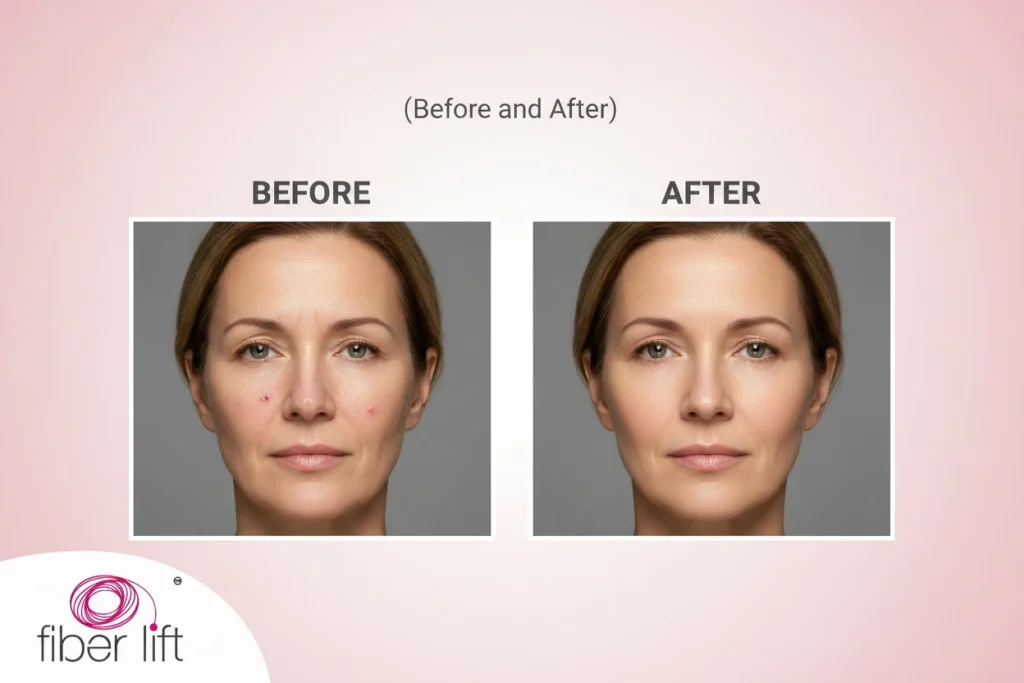
Laser face lift results are progressive.
Most patients notice improvement within 4 to 6 weeks. Full results usually develop between three and six months as collagen continues to regenerate.
Improvements typically include:
- Firmer skin texture
- Subtle lifting around the jawline
- Reduced fine lines
- Improved neck tightness
The results look natural. They do not drastically change facial structure.
This gradual improvement is often preferred by patients who want to avoid obvious cosmetic changes.
When Does Laser Face Lift Not Work?
Laser facelift treatment may not produce strong results if:
- The skin has severe laxity, requiring surgical repositioning.
- Collagen production is significantly reduced due to advanced ageing.
- The patient expects dramatic or instant lifting.
- The treatment is performed using insufficient energy levels.
In addition, lifestyle factors such as smoking, poor nutrition, or chronic sun damage can affect outcomes.
Laser skin tightening works through biological stimulation. Therefore, results depend on how well your body responds.
Honest assessment is essential. Ethical practitioners should explain when laser treatment is unlikely to meet expectations.
Clinical Evidence Behind Laser Skin Tightening
Several clinical-based studies support the role of thermal stimulation in collagen remodelling. Dermal heating, when controlled, induces neocollagenesis, thereby improving skin elasticity over time.
Modern laser systems can accurately control depth. This makes it both safer and more consistent.
However, outcomes vary. Results are affected by treatment protocols, device quality, and practitioner expertise.
How Long Do Laser Skin Tightening Results Last?
Results typically last between 12 and 24 months, depending on age, skin quality, and lifestyle.
Because ageing continues, maintenance treatments may help sustain firmness.
Laser face lift treatment does not stop ageing. Instead, it slows visible decline by strengthening collagen structure.
Does Laser Face Lift Work Better Than Other Treatments?
Effectiveness depends on your concern.
Laser treatment usually benefits skin texture and tightening more than HIFU. Unlike thread lifts, lasers allow for a slower collagen-based evaluation and development without any material being inserted under the skin.
Laser treatment is less invasive than surgery, but its lifting effect is more subtle.
The exact choice is determined by how loose the traps are and what volition you try to achieve.
Final Verdict: Does Laser Face Lift Work?
Yes, laser facelift treatment works for the right candidate.
It improves firmness, and stimulates collagen. It also enhances facial definition over time.
However, it does not replace surgery in cases of severe sagging. And it does not create instant lifting.
The key to effectiveness lies in:
- Accurate assessment.
- Proper energy settings.
- Realistic expectations.
If you are considering a laser facelift, a personalised consultation will determine whether it is the right option for your skin.
FAQ’S: Does laser facelift work?
Yes, it is effective for mild to moderate sagging. It encourages collagen production deep within the skin, leading to greater firmness and elasticity over time. But it is not realigning tissue as surgery does. For severe sagging, you may need a different approach.
Most patients notice visible improvement within 4 to 6 weeks. Full results usually take three to six months to develop as collagen continues to rebuild. Because the treatment works at a biological level, improvement is gradual rather than instantaneous.
Results Of Laser Skin Tightening Are Not Permanent. Ageing continues naturally. Results typically last 12 to 24 months, depending on skin type and lifestyle. Maintenance sessions can be offered to prolong results.
It can work even >50 as long as there is anadequate skin elasticity. It’s the quality of collagen, not age alone, that determines the results. During the consultation, practitioners evaluate whether your skin responds effectively to collagen-stimulating treatments.
The results from a laser facelift may not be as strong if skin laxity is marked, collagen production has greatly reduced, or expectations are unrealistic. It is also contingent on factors such as device quality and practitioner expertise. An outcome can only be successful when it is adequately evaluated.
Some patients achieve good results after just one session, and others respond to a short course of treatment. A baseline for the number of sessions per person is established by a person’s skin thickness, laxity level, and desired results. The more specific your plan is, the better the answers you will get.
The process is non-surgical and does not require any surgical incisions or general anaesthesia. That translates into less time lost to surgery and related risks. But it’s also a gentler lift than surgery can give. Safety is based on appropriate technique and patient selection.
Patients with pronounced dropping skin should still undergo surgical procedures. It is an ideal treatment for early to mid-ageing. Those who need dramatic structural lifting may require surgery